
Field notes Issue 01 · Est. 2026 Lyndhurst, New Jersey

Physical cards,
examined closely.

A printed trading card is a small manufactured object: layered paper, ink, a clear coat, a die-cut edge. This publication is about that object — how it is built, how it ages, how to describe it honestly, and how to keep a table of them in good shape for years.

Guides
08
Glossary terms
40
Sections
06
Products sold
00
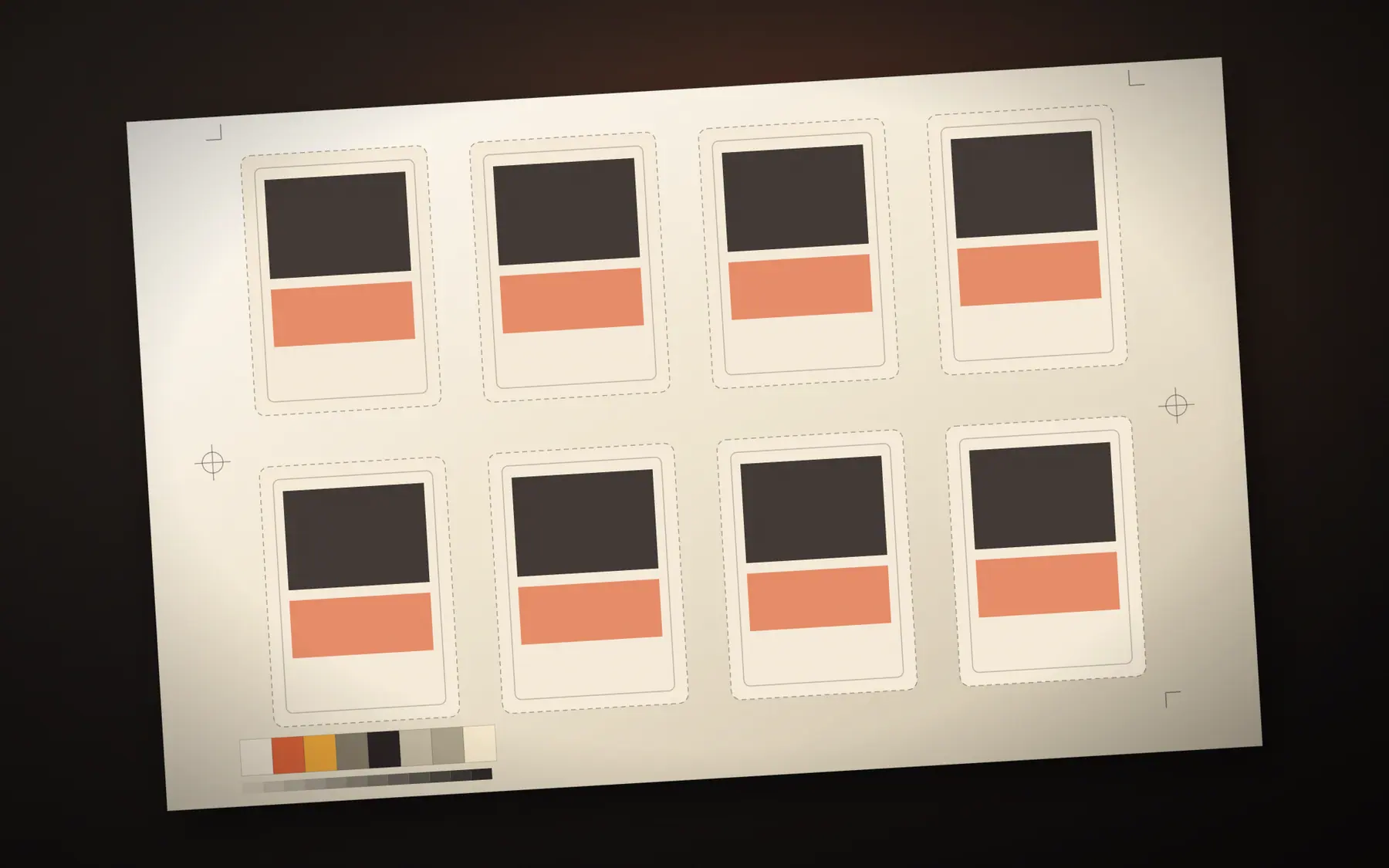
An exploded cross-section of a single trading card: seven rounded layers separated vertically, from the reverse print at the bottom to the clear finish at the top
Fig. 1 — seven layers, one card Not to scale
  1. Ink image06
  2. Opaque core03
  3. Base coat05
  4. Clear finish07

Four of the seven are shown; the full breakdown, with thicknesses, is in Anatomy of a physical card.

01 — Materials & manufacture

02 — Condition & description

03 — Care, catalogues & the table

What this is

A reference desk for the paper kind.

Most writing about trading cards is written for a moment: a new set, a tournament, a price move. This site takes the longer view. We look at cards the way a small museum might look at printed ephemera — as physical evidence of a manufacturing process, and as objects that quietly change while you own them.

That means three interests run through everything here. First, how a card is made: the plies of board, the white base coat, the four process inks, the clear top layer, the steel die that finally separates it from a sheet. Second, how it survives: light, heat, moisture, the plastic you store it in, the way you shuffle. Third, how we describe it: a shared vocabulary for condition, printing variation and edition so that two people looking at the same card can say the same thing about it.

We are not a marketplace, a rules database, or a news feed. There is nothing to sign up for here and nothing to add to a cart. The site is funded by its own operation and exists to be read. If a page is not useful on its own, it should not be on the site — that is the editorial bar described in our Editorial Policy.

A

Descriptive, not promotional

Plain language about what a thing is. No urgency, no persuasion.

B

Practical by default

Every guide ends with something you can do with your hands.

C

Correctable

Corrections are published, dated and linked. Write to us any time.

Four things worth knowing

A card is stable, until it isn't.

Nothing dramatic happens to paper most days. But four slow processes are always running, and understanding them is most of what separates a collection that survives from one that fades.

01 / 04

Board and core

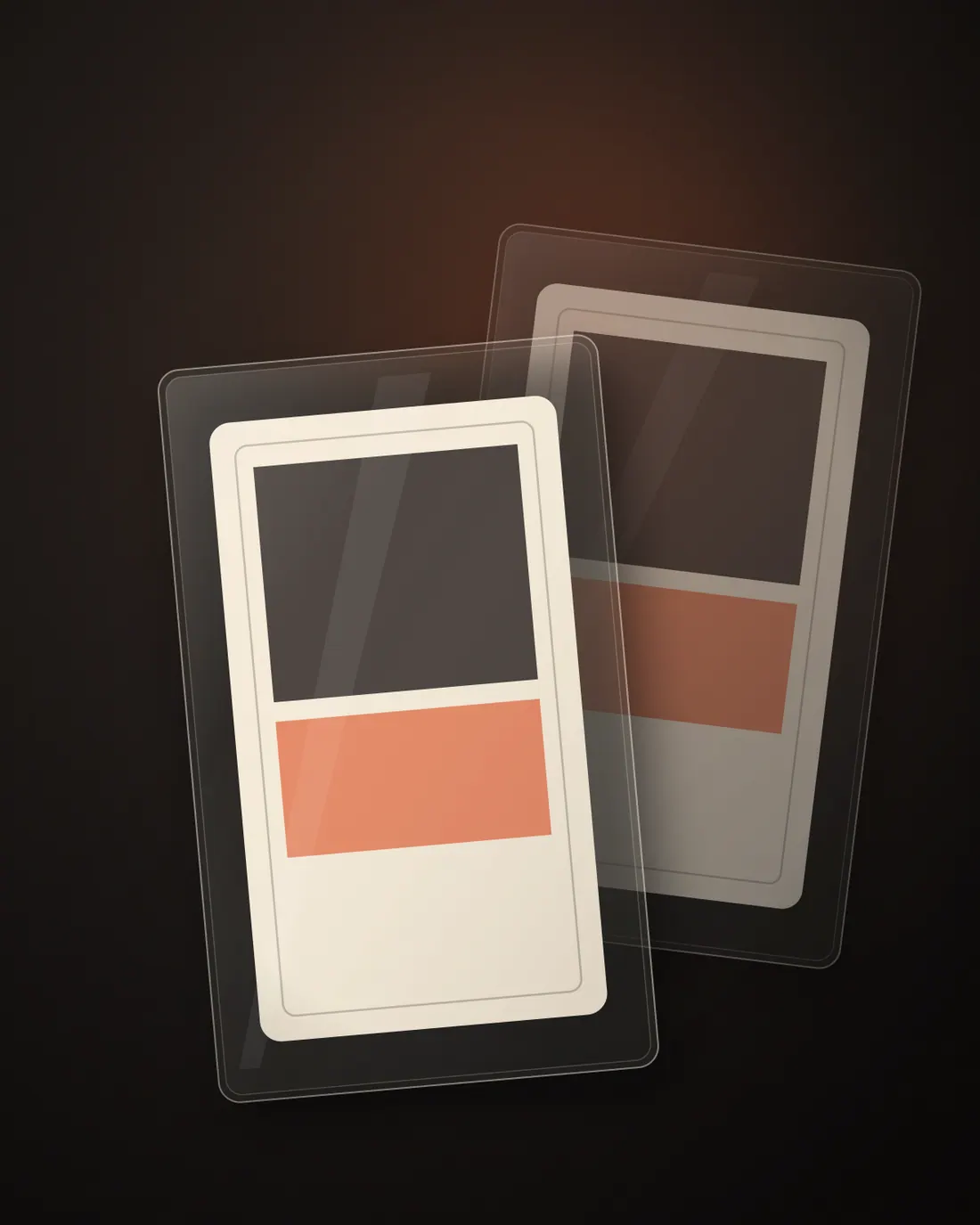
Card stock is usually several plies laminated with an opaque core so the back cannot show through the front. That core is why a card feels stiff, and why a crease propagates the way it does.

Read on

02 / 04

Ink and clear coat

Process inks sit on a white base layer and are sealed under a clear coat. Abrasion attacks that coat first, which is why sleeve wear shows as a dull patch long before any ink is missing.

Read on
03 / 04

Light and heat

Ultraviolet light bleaches dyes and yellows paper; heat accelerates every chemical reaction involved. A bright shelf is a slow bleaching process, not a neutral place to keep things.

Read on
04 / 04

Handling

Skin oils, table grit and pressure from a firm grip do more damage in an evening than a year on a shelf. Clean hands and a soft surface cost nothing, and they prevent most of the wear people pay to have fixed.

Read on
Four people around a wooden table mid-session, cards spread between them and glasses set to one side

Position

“A card that stays in a box is an archive. A card that comes out on a Friday is an object with a history. Both are legitimate — but only one of them needs a sleeve.”

From the card night guide

Shared vocabulary

Six words that do a lot of work.

Most confusion about cards is not about cards. It is about two people using the same word for slightly different things.

Full glossary — 40 terms
Centering
How evenly the printed border sits inside the cut edge. Measured as a ratio, not a feeling — 55/45 means the left border is wider than the right.
Whitening
Pale fibres exposed where the printed surface has worn at an edge or corner. Distinct from a scratch: whitening follows the cut, not the artwork.
Black core
An opaque middle ply that stops the reverse printing from being visible through the face. Look at a card edge under light and you can often see it.
Die line
The path a steel rule follows to cut a card from a printed sheet. Slight roughness along an edge is a normal artefact of that process, not damage.
Collector number
A small printed code identifying position within a set, usually of the form 087/250. It is the fastest way to distinguish reprints of similar art.
Play wear
Damage consistent with shuffling and handling: corner rub, edge nicks, a faint clouding of the clear coat. Honest to describe, easy to avoid.

Correspondence

Corrections, questions and disagreements are all welcome.

If a page here is wrong about a material, a term or a date, we want to know. Write to the editorial address and we will look at it the same week.

Notice

Website notice

tcgplay.sbs is an independent, informational publication. We write about physical collectible cards as objects — paper, printing, condition, storage and table use. This site does not sell cards or any other product, does not run accounts or downloads, and is not affiliated with, endorsed by, or sponsored by any game publisher or brand. Card names and set names appear in descriptive, editorial contexts only. Details are explained in our Disclaimer and Editorial Policy.

Who runs this